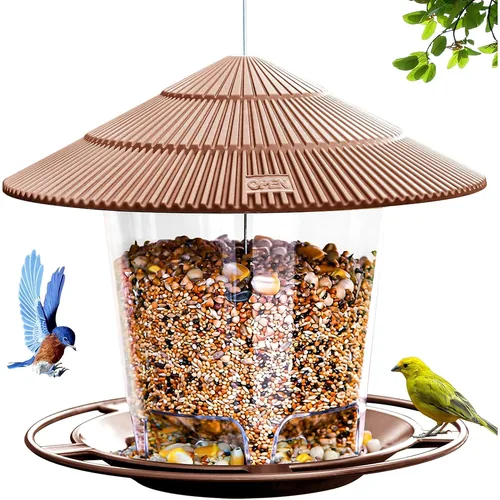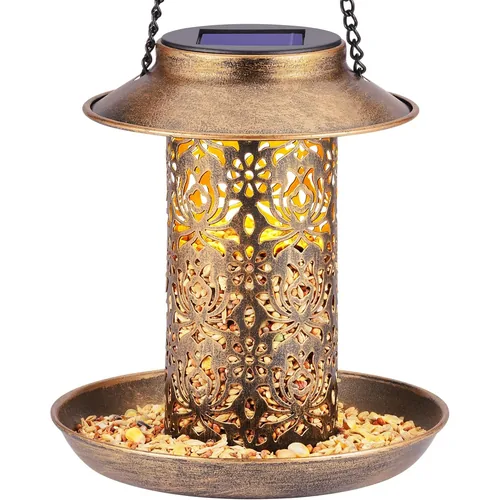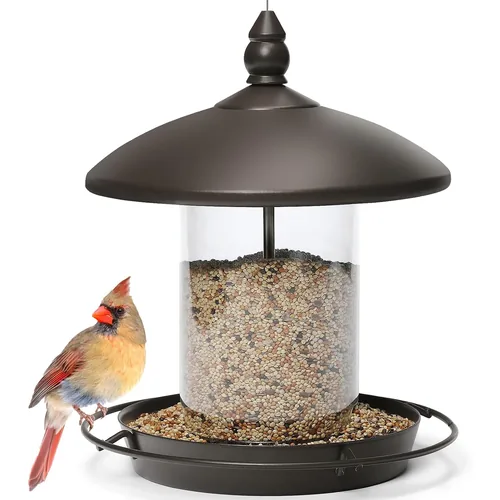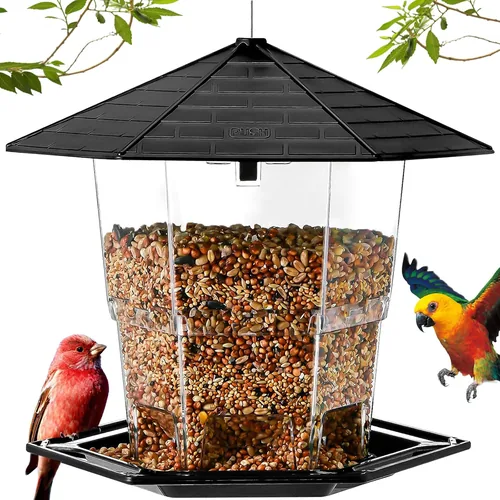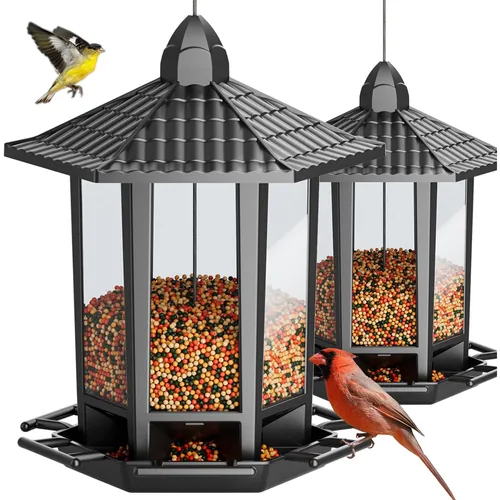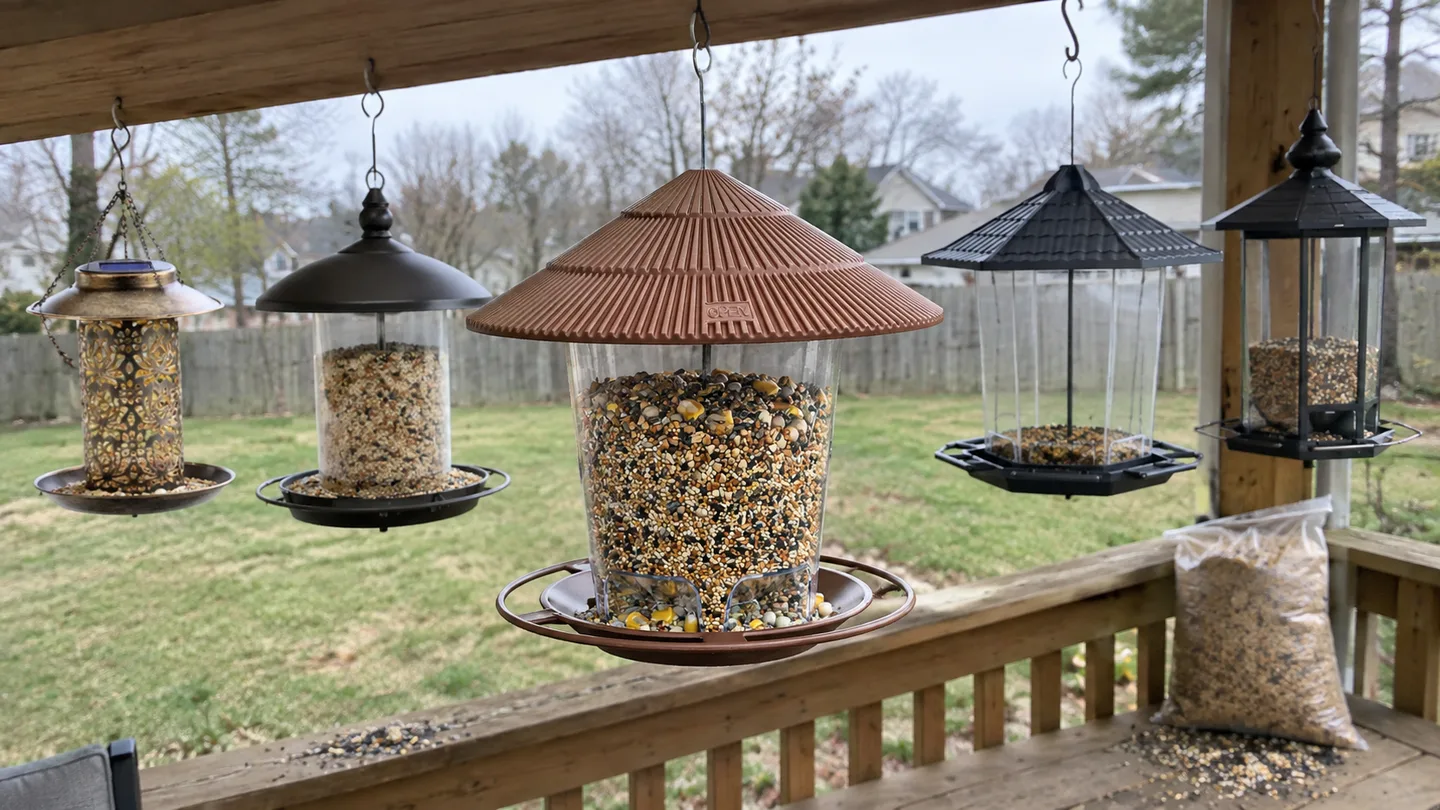
It is almost never the birds. When a feeder goes quiet, people blame the neighborhood cats or the weather. Most of the time the problem is hanging right there on the hook.
Here is the first one. Rain gets in. It runs off a narrow roof, pools in the tray, and soaks the seed at the bottom of the feeder. Within days that seed clumps, sprouts or turns moldy. Birds notice. They stop landing, and the feeder looks full because nobody is eating from it.
It gets worse. Wet seed jams the openings, so even the seed that is still dry cannot reach the tray. Most people only find out when they go to refill it and have to dump the whole thing in the trash.
The second reason is simpler. A feeder that is a chore to fill gets filled less. Screw-on caps, lift-off tops and parts that come apart in your hands turn a two-minute job into one you put off. And a feeder you put off filling is a feeder you never get around to washing.
Then there is the one nobody warns you about. A feeder the birds actually like empties fast. A small chamber that looked generous in the box is gone by lunch on a busy morning, and whatever the flock leaves, the squirrels finish. You end up refilling every day or leaving it empty for days.
That is exactly why we wrote this guide.
We took five of the most popular hanging seed feeders and ran every one through the same four checks: does the seed stay dry through a hard rain, can you refill it in seconds without taking it apart, can you see when it is running low, and does it hold enough to last between refills. Most failed at least one. Only one passed all four.
Below you will find what actually separates a feeder the birds use every day from one they ignore, what to look for before you buy, and the five we ranked.
First, what is really at stake when a feeder goes wrong.